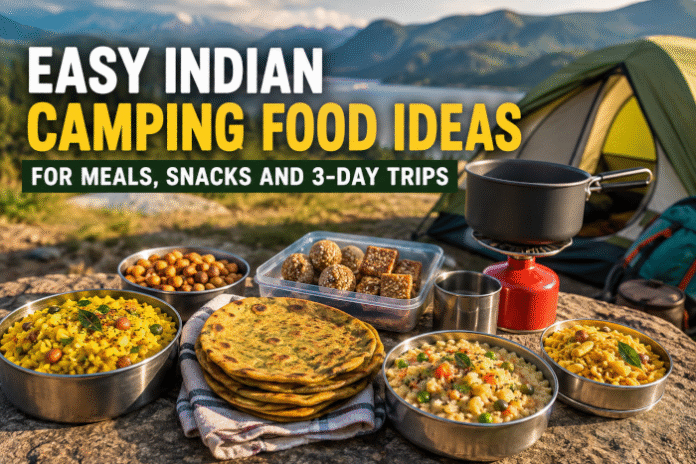
Camping food should match the kind of trip you are taking. A family driving to a campsite can carry a cooler, heavier ingredients, and more cookware, while a backpacker usually needs lighter food with simpler preparation and shorter cooking times.
Indian camping food can work well in both situations. Poha, thepla, roasted chana, peanuts, dry mixes, and simple one-pot meals can keep preparation manageable while providing familiar flavours. Foods such as eggs, dairy, and some sandwich fillings are also practical when they can be kept properly chilled.
This guide covers easy foods to cook or pack, vegetarian options for trips without refrigeration, lightweight choices for backpacking, and a simple three-day camping food plan.
Quick Guide to Indian Camping Foods
| Food | Best Use | Cooking Needed | Refrigeration | Backpack-Friendly |
|---|---|---|---|---|
| Poha | Breakfast | Minimal | Dry ingredients usually do not need cooling | High |
| Dry upma mix | Breakfast | Minimal | Dry mix usually does not need cooling | High |
| Thepla | Packed meal | None | Depends on ingredients and storage conditions | Medium |
| Chapatti/roti | Meal or wrap | None if prepared at home | Depends on preparation and storage | Medium |
| Besan chilla | Breakfast or lunch | Yes | Dry flour and spices do not need cooling | High |
| Indian-style omelet | Breakfast | Yes | Cooler required for eggs and other perishables | Low |
| Sandwich or roti roll | Lunch | None or minimal | Depends on filling | Medium |
| Roasted chana and peanuts | Snack | None | Dry ingredients generally do not need refrigeration | High |
| Roasted sweet potato | Snack or side | Yes | Depends on whether it is carried raw or prepared | Low |
| Quick khichdi mix | Dinner | Yes | Dry ingredients usually do not need cooling | Medium |
| Masala oats | Breakfast or light meal | Minimal | Dry ingredients usually do not need cooling | High |
| Chikki or suitable dry laddoo | Sweet or snack | None | Depends on ingredients and packaging | High |
“No refrigeration” does not mean every prepared food can be left at outdoor temperatures indefinitely. The term is most useful for dry, shelf-stable ingredients and appropriately packaged foods. Meals containing eggs, dairy, cooked leftovers, or other perishable ingredients need suitable cold storage.
12 Easy Indian Camping Food Ideas
1. Poha
Poha is one of the most practical Indian camping breakfasts because flattened rice is light and easy to portion before leaving home.
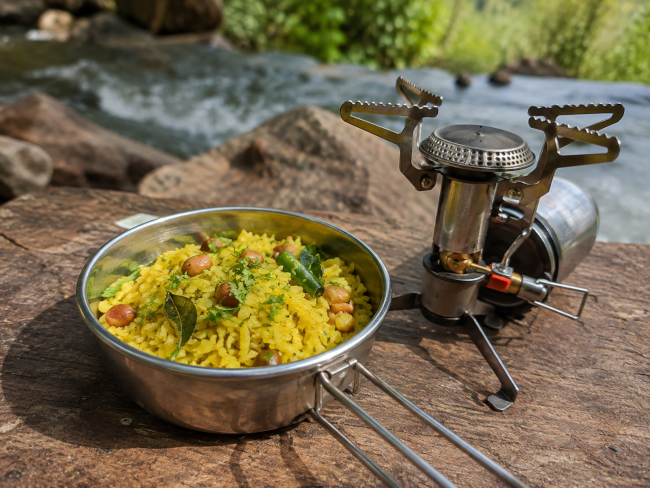
Measure the poha, peanuts, and dry spices into a meal bag or container before the trip. Mustard seeds, turmeric, and salt can also be portioned in advance. At camp, you mainly need a pot or pan, water, and a little oil.
Fresh onion, chilli, coriander, or lemon can be added when storage conditions allow, but they are optional. Keeping the basic mix dry reduces the number of ingredients you need to carry.
Poha works particularly well for breakfast or a quick lunch when you want a warm meal without lengthy preparation.
2. Dry Upma Mix
Upma can be adapted for camping by preparing the dry component at home. Roasted semolina and dry seasonings can be portioned together so that campsite preparation mainly involves adding water and cooking the mixture.
If you want vegetables in the upma, choose them according to your storage setup. Car campers with a cooler have more flexibility, while backpackers may prefer a simple dry mix or suitable dehydrated additions.
A dry upma mix provides breakfast variety without requiring a separate set of cooking equipment.
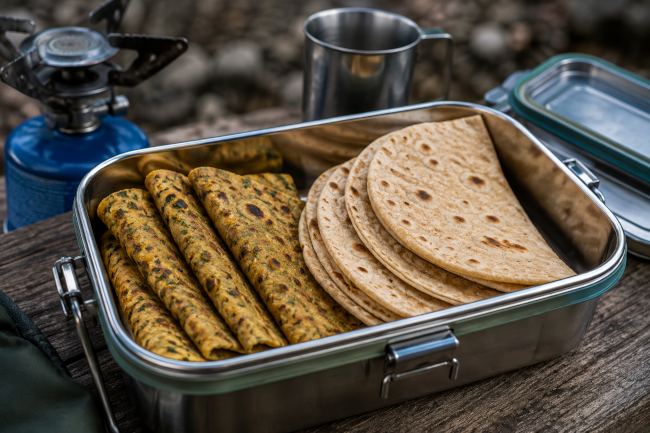
3. Thepla
Thepla is useful when you need food that can be eaten without starting a stove. It can work for the journey to camp, the first lunch, or a quick meal when cooking is inconvenient.
Prepare the theplas at home and pack them carefully to protect them from moisture and crushing.
Do not assume every homemade thepla has the same storage life. Ingredients, moisture, packaging, outdoor temperature, and trip duration all affect how well prepared food travels.
For car camping, thepla can be paired with suitable accompaniments. For backpacking, eating it on its own avoids carrying heavy jars or additional containers.
4. Chapatti or Roti
Chapattis are flexible because they can be eaten as part of a meal or used as wraps.
The simplest option is usually to prepare them before leaving and use them during the earlier part of the trip. They can be paired with a dry accompaniment or turned into simple rolls.
Making fresh rotis at camp is possible, but it requires flour or dough, a rolling setup, and a tawa or suitable pan. That may be reasonable for family camping but unnecessary for someone carrying everything in a backpack.
Storage requirements depend on the recipe, preparation, and conditions, so homemade rotis should not automatically be treated as long-lasting shelf-stable food.
5. Besan Chilla
Besan chilla works well when you want to carry ingredients in dry form but still cook a fresh meal at camp.
Before leaving, combine besan with salt and the dry spices you normally use. At camp, add water to make the batter and cook it in a pan with a small amount of oil.
Fresh onion, chilli, or coriander can be added if available and stored appropriately, but the basic version does not depend on them.
The dry mixture is compact, and the same pan used for other meals can also be used for the chillas.
6. Indian-Style Omelet
An Indian-style omelet can be a practical breakfast for car camping when reliable cold storage is available. It is not a suitable no-refrigeration option.
Eggs and other perishable ingredients should be kept properly chilled until they are ready to use. Onion, chilli, and spices are enough for a simple campsite omelet, while cheese is optional and may require additional cold storage.
For backpacking without a cooler, a dry breakfast such as poha, oats, or upma is usually more practical.
7. Simple Sandwiches or Roti Rolls
Sandwiches are convenient, but their suitability for camping depends largely on the filling.
A simple spread made from an unopened shelf-stable product may require little equipment. Sandwiches containing dairy, egg, paneer, or other perishable fillings need appropriate cooling.
Roti rolls can be less fragile than sliced bread in a tightly packed food bag.
When practical, assemble sandwiches or rolls shortly before eating instead of preparing several days’ worth in advance. Carrying wet ingredients separately can also help prevent bread or roti from becoming soggy.
8. Roasted Chana and Peanuts
Roasted chana and peanuts are among the easiest foods to pack because dry versions require no campsite cooking.
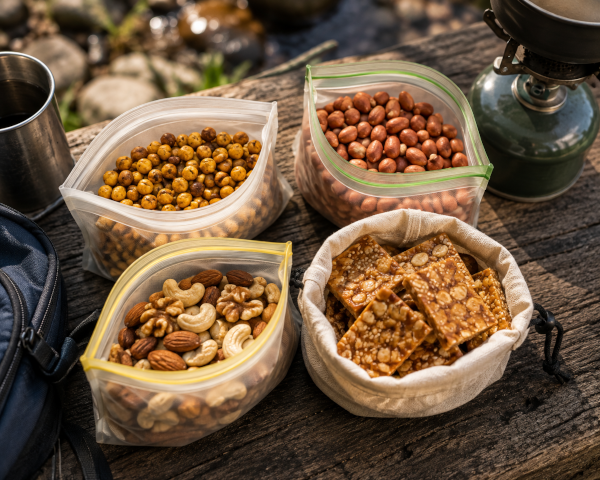
They work well as trail snacks, with tea, or as a quick bite while setting up camp.
Instead of mixing peanuts with fresh onion and tomato before leaving, keep the dry ingredients separate and add fresh onion, tomato, chilli, or lemon when you are ready to eat them.
For trekking, portioning the mixture into smaller bags or containers makes it easier to carry and use throughout the trip.
9. Roasted Sweet Potato
Sweet potato is generally more practical for car camping than lightweight backpacking because whole vegetables add weight and bulk.
At camp, sweet potatoes can be cooked using suitable cookware or an approved fire setup. Do not rely on an open campfire without checking the rules of the campsite or local authority.
Once cooked, they can be seasoned with salt, lemon, or chaat masala.
This option works well when you want a simple hot snack with few ingredients, but it is less convenient when pack weight is a priority.
10. Quick One-Pot Khichdi
Khichdi can provide a satisfying dinner without requiring several pans or complicated preparation.
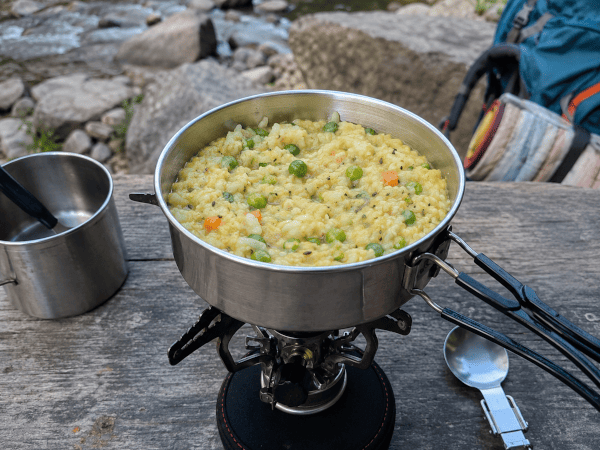
Measure the rice, dal, and dry spices into one meal pack at home so you do not need to handle multiple packets at the campsite.
The main consideration is cooking time. Raw grains and lentils may require more fuel and water than instant foods, which matters more during backpacking than car camping.
If fuel is limited, choose quicker-cooking ingredients or an appropriately packaged instant or dehydrated khichdi.
11. Masala Oats
Dry oats are compact and offer another easy breakfast when you want a change from poha or upma.
Prepare a savoury seasoning mix at home using the dry spices you prefer. At camp, cook the oats with water and add the seasoning.
The basic version requires no chopping and creates little packaging waste, making it useful for backpacking.
Fresh vegetables can be added during car camping if your storage setup allows.
12. Chikki or a Suitable Dry Laddoo
A camping menu does not have to contain only savoury food.
Chikki is easy to portion and requires no campsite cooking. Some dry homemade laddoos may also travel well, depending on their ingredients and preparation.
Milk-heavy, cream-based, or otherwise perishable sweets should not be treated the same way as dry snacks.
For trekking, individually portioned sweets are easier to carry than a large box that can be crushed or repeatedly opened.
Vegetarian Indian Camping Foods That Don’t Need Refrigeration
For a trip without a cooler, build most of the menu around dry ingredients and foods that are shelf-stable in their packaged or uncooked form.
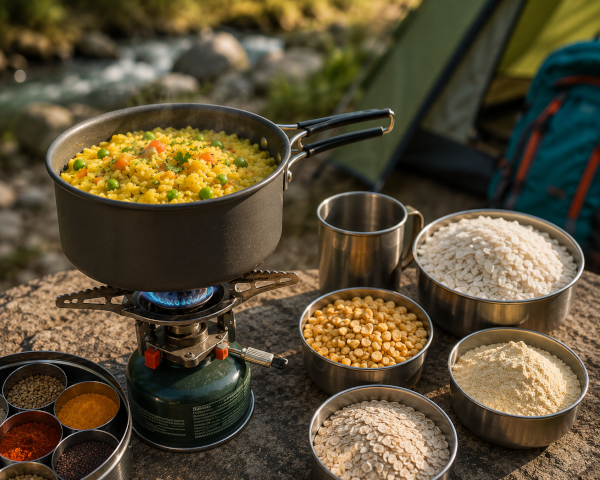
Useful options include:
- Dry poha and seasoning mix
- Roasted semolina upma mix
- Besan and dry spices for chilla
- Dry oats and masala
- Roasted chana
- Peanuts and nuts
- Dried fruit
- Chikki
- Packaged dry snack mixtures
- Rice and suitable dal for a one-pot meal
- Commercially packaged dehydrated meals
- Unopened shelf-stable condiments where useful
Some prepared breads may also work for shorter trips, but storage depends on their ingredients, moisture, packaging, and surrounding temperature.
No-cook and no-refrigeration are also different concepts. Chikki requires neither cooking at camp nor refrigeration when stored appropriately. Dry poha ingredients may not require refrigeration, but the meal still needs preparation.
Lightweight Indian Camping Foods for Backpacking
Pack weight matters far more when you are carrying your food for several kilometres than when it is travelling in a car.
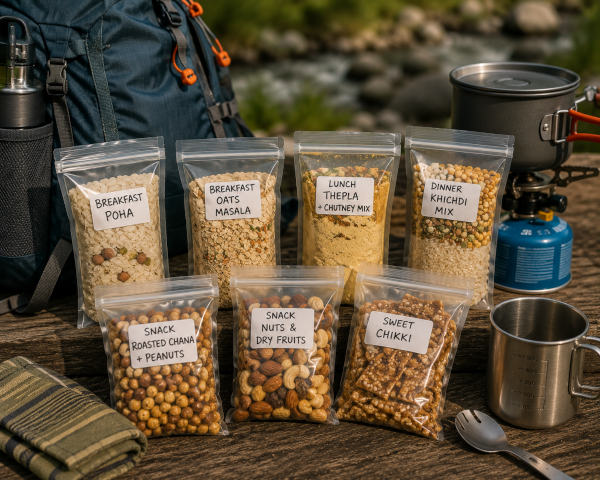
Backpacking menus generally work better with compact dry foods and meals that require little cookware. Suitable options include dry poha mix, oats, roasted chana, peanuts, nuts, chikki, besan mix, and appropriately packaged dehydrated meals.
Dry ingredients also mean you are not carrying as much water inside the food itself. You can add water during preparation, provided your route gives you access to safe water or you carry enough with you.
Cooking time matters as well. A meal that requires prolonged simmering may increase fuel use even when the ingredients themselves are lightweight.
Car Camping vs Backpacking
For car camping, weight is less restrictive. A cooler, fresh vegetables, eggs, heavier cookware, and whole potatoes or sweet potatoes may all be reasonable.
For backpacking or trekking, focus more on:
- Pack weight
- Food volume
- Cooking fuel
- Water requirements
- Packaging waste
- Preparation time
- Number of pots or pans required
A food that works well for car camping is not automatically suitable for backpacking.
Simple 3-Day Indian Camping Food Plan
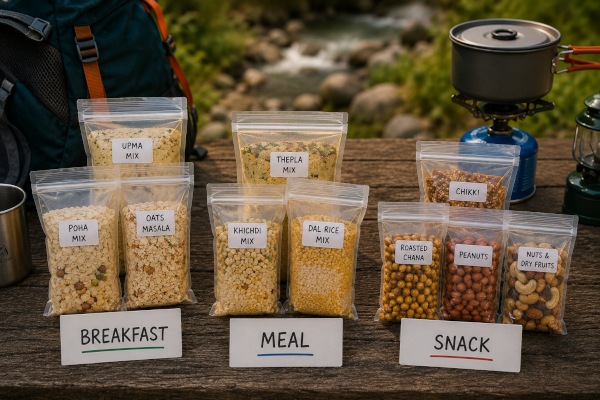
This sample menu shows how the foods above can work together. Adjust it according to the number of campers, dietary requirements, weather, available water, cooking facilities, and whether reliable cold storage is available.
| Day | Breakfast | Lunch | Snack | Dinner |
|---|---|---|---|---|
| Day 1 | Poha | Thepla with a suitable accompaniment | Roasted chana and peanuts | Quick one-pot khichdi |
| Day 2 | Dry-mix upma | Roti rolls or sandwiches | Chikki | Besan chilla; omelet can be added if proper cold storage is available |
| Day 3 | Masala oats | Thepla or chapatti with dry snacks | Nuts or dried fruit | Poha, khichdi, or another pre-portioned quick meal |
Without refrigeration, replace eggs and perishable sandwich fillings with shelf-stable alternatives.
It is also useful to carry one simple backup meal or snack that does not depend on fresh ingredients. Bad weather, a delayed hike, or limited cooking fuel can easily change the original meal plan.
How to Pack Indian Food for Camping
Do as much measuring as possible at home.
Instead of taking full bags of poha, semolina, besan, and spices, portion the amount required for each meal. One pack can contain the dry poha and spices for breakfast, while another holds the khichdi ingredients for dinner.
A few practical habits help keep food organised:
- Keep dry ingredients protected from moisture.
- Separate wet ingredients from dry foods.
- Use leak-resistant containers.
- Label meal packs when several mixes look similar.
- Avoid carrying full-size spice containers when only a small amount is needed.
- Protect bread, rotis, and brittle snacks from being crushed.
- Keep perishable ingredients properly chilled.
- Carry only the cookware required for the meals you plan to make.
- Pack out wrappers and other food waste rather than leaving them at the campsite.
For backpacking, removing unnecessary outer packaging before the trip can reduce bulk, provided the food remains safely contained and identifiable.
Which Camping Foods Need a Cooler?
Some camping foods are practical only when proper cold storage is available.
Depending on the ingredients, this may include:
- Eggs
- Dairy products
- Fresh paneer
- Cooked leftovers
- Perishable sandwich fillings
- Sauces or spreads that require refrigeration after opening
If these foods cannot be kept properly chilled, build the menu around dry and shelf-stable ingredients instead.
This is why an omelet may work well for car camping with a cooler but be unsuitable for a multi-day backpacking trip without refrigeration.
How to Choose Food for a Camping Trip
Consider the Length of the Trip
An overnight camp gives you more flexibility with foods that will be eaten soon. Multi-day trips benefit from more careful planning and a larger proportion of dry or shelf-stable ingredients.
Know Whether You Are Car Camping or Backpacking
A heavy vegetable, jar, or canned meal may be completely reasonable when the car is beside your tent but inconvenient when you are carrying it uphill.
Check Your Cooking Setup
A frying pan makes omelets and chillas possible. A single pot works for poha, upma, oats, or khichdi. Planning meals around the same cookware reduces the amount of equipment you need to carry.
Think About Fuel
Long cooking times matter more on a trek where every fuel canister has to be carried. Quick-cooking foods can reduce both preparation time and fuel use.
Plan Around Water
Some dry foods are light because you add water during cooking. That advantage only works when enough safe water is available for both meals and drinking.
Separate Shelf-Stable and Perishable Foods
Dry roasted chana has very different storage requirements from an egg sandwich. Plan each item according to its ingredients rather than treating all camping foods the same way.
Check Campsite Rules Before Relying on a Fire
Do not plan a meal that can only be prepared over an open fire without first checking whether fires are permitted. A camping stove may be a more predictable option.
Frequently Asked Questions
What Indian food is best for camping?
Poha, upma mix, thepla, roasted chana, peanuts, besan chilla, oats, and simple one-pot meals are practical choices. The best option depends on whether you have refrigeration, how far you need to carry the food, and what cooking equipment is available.
What vegetarian camping food does not need refrigeration?
Dry poha, roasted chana, peanuts, nuts, dry upma mix, oats, besan, chikki, and appropriately packaged shelf-stable foods are useful options. Prepared foods should be judged according to their ingredients and storage conditions rather than assuming all vegetarian food is safe without refrigeration.
What Indian food can I take for a 3-day camping trip?
A simple three-day plan can combine poha or upma for breakfast, thepla or roti-based lunches, roasted chana and nuts for snacks, and khichdi or another one-pot meal for dinner. Add eggs, dairy, or other perishable foods only when suitable cold storage is available.
What are good lightweight Indian foods for backpacking?
Dry poha mix, oats, roasted chana, peanuts, nuts, chikki, besan mix, and dehydrated meals are easier to carry than wet or bulky foods. Cooking time, fuel, and water requirements should also be considered.
Can I take homemade Indian food camping?
Yes, but the food needs to suit the trip and storage conditions. Dry foods may be easier to transport, while dishes containing perishable ingredients require appropriate cooling.
Which Indian snacks travel well for camping?
Roasted chana, peanuts, nut and dried-fruit mixes, chikki, and suitable packaged dry snacks are convenient because they require no campsite cooking and are easy to portion.
Final Thoughts
Choose camping food according to your transport, storage, cooking setup, and trip length. Car campers can make use of coolers and fresh ingredients, while backpackers generally benefit from compact dry foods and simpler meals.
Plan the menu before leaving, keep perishable food properly chilled, and carry at least one low-effort backup meal or snack.

